
In one of our projects we are trying to make discs for ELNA sewing machines ourselves on the 3D printer. To do that we first have to understand how the discs work, and be able to reduce them to a model ourselves.
This article explains the current progress in analysing and making the Elna discs. The current state can always be found in our wiki.
Basic discs
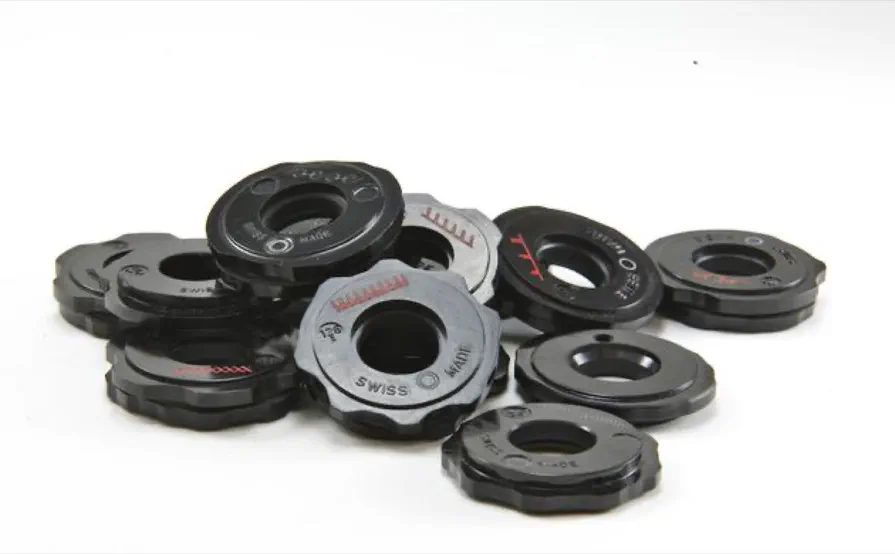
For the ELNA Supermatic machines from the 1950s there are mainly 2 kinds of disc:
- Simple discs are fairly flat and have only an outer ring. The feed speed is constant and only the left-right movement of the needle is controlled.
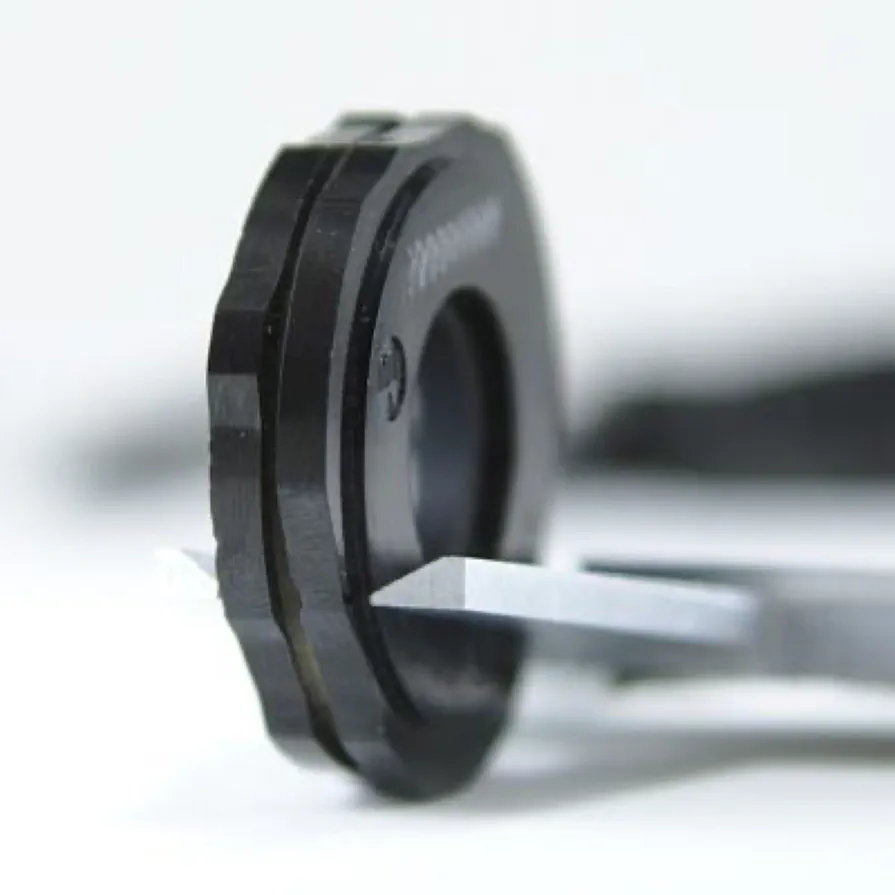
- Double discs are somewhat taller and have two rings. One still controls the left-right movement of the needle, the other controls the forward and backward movement.
In both cases there are several levels, represented by outer teeth protruding by different amounts. (Large deflection == large effect.)
Dimensions
The discs consist of a thick inner ring, chamfered on the underside so that it fits properly onto the base in the machine.
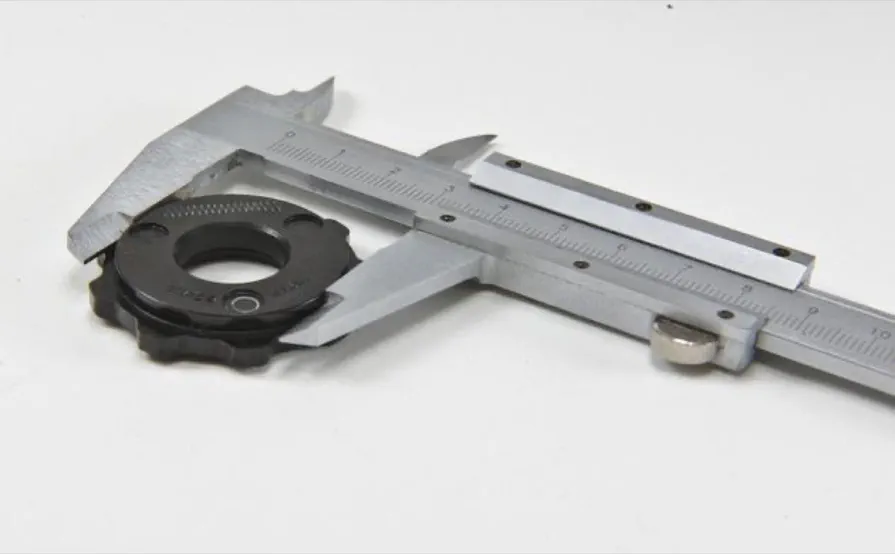
On the underside of the disc there is a hole into which the machine puts a pin that holds the disc and turns it.
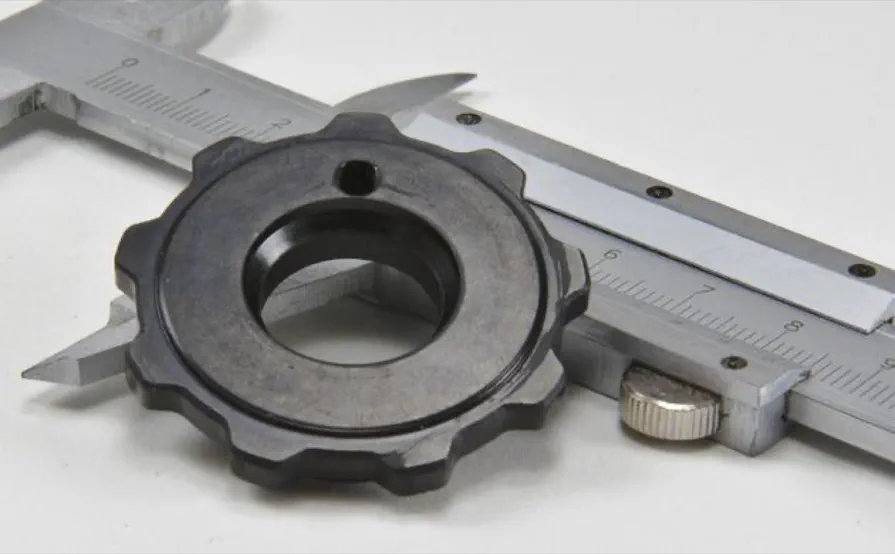
The thick inner ring has a diameter of 3.4 cm, with a 1.7 cm wide hole exactly in the middle. On this ring there are then rings with raised and lowered sections, which can vary from 0.2 cm to 0.5 cm.
The chamfer on the underside is in 2 steps. First there is a 1.5 mm deep vertical recess (towards the underside of the disc). That is followed by a 45-degree chamfer which, over 1.5 mm of depth, makes up the 1.5 mm difference to the inner edge of the hole.
The drive hole is about 4 mm long (measured away from the centre of the disc) and 3 mm wide. It is 2.5 mm from the inner edge (including the 1.5 mm chamfer). The hole is 5.5 mm deep and 3 mm from the outer edge of the inner ring.
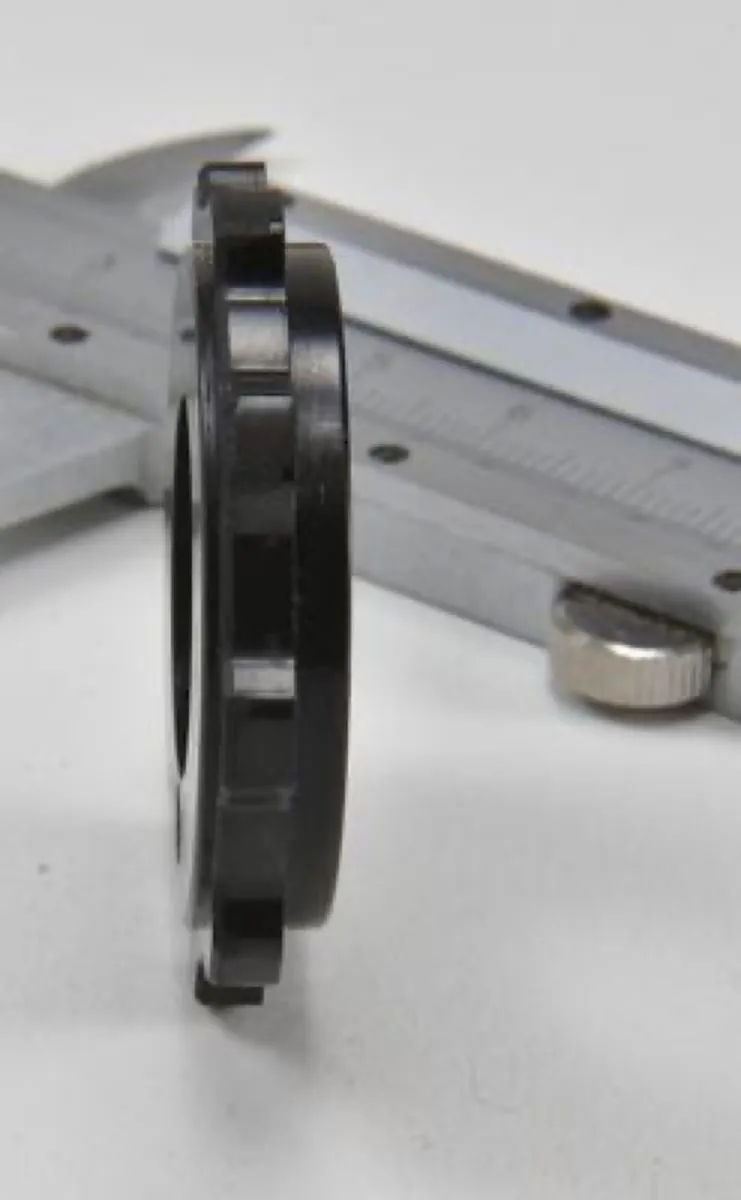
On simple discs, the ring carrying the needle position information starts 1 mm above the lower edge of the inner ring. The ring is 3.5 mm wide, so the inner ring only needs to be 7 mm. That leaves 2.5 mm above the ring without any information.
The height should be kept to nonetheless, so that the disc engages properly. In one full rotation of the disc the needle makes 18 evenly spaced stitches, starting at the drive hole.
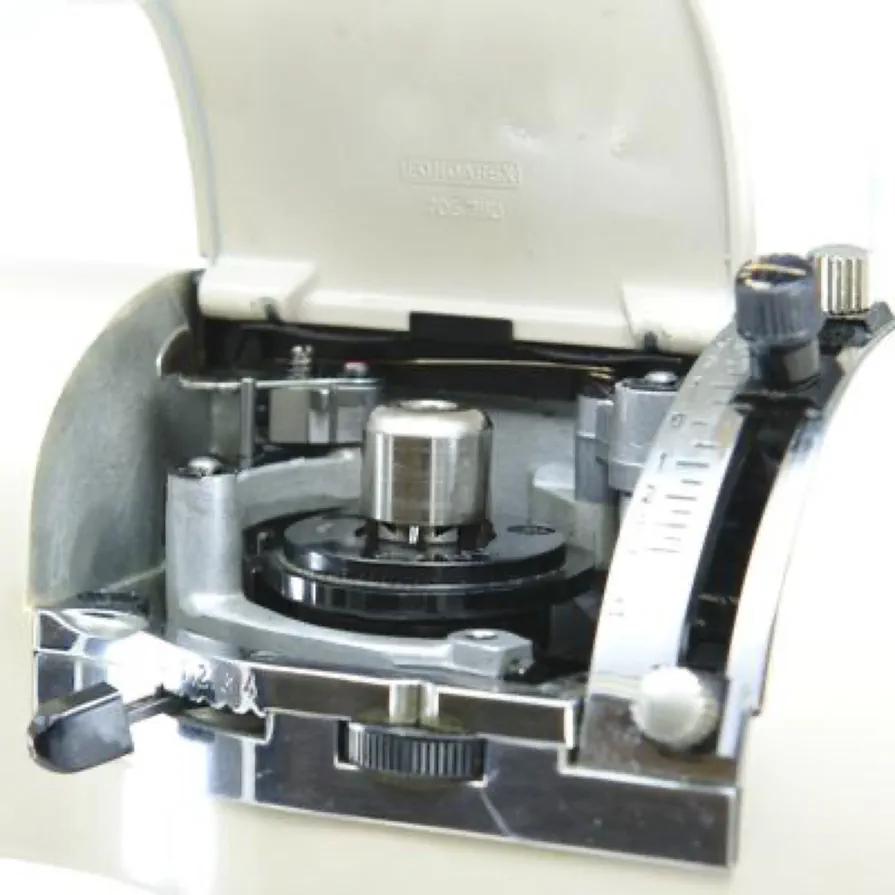
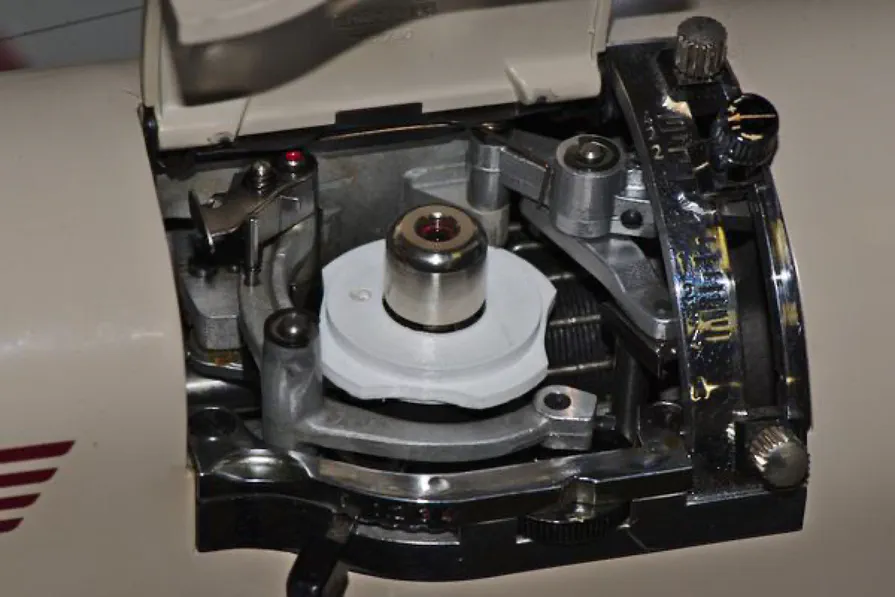
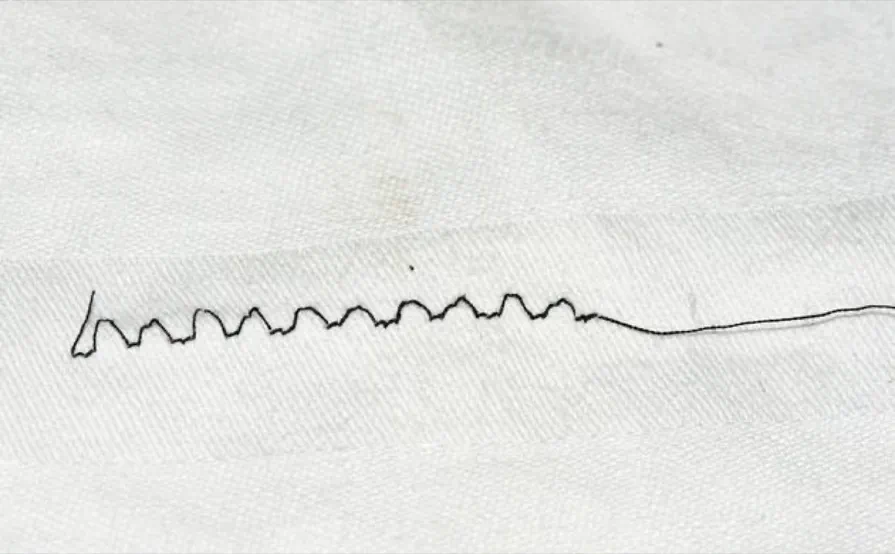
The double discs are 9 mm tall. They carry two 3 mm wide rings, 1 mm apart, each 1 mm from the upper and lower edge of the disc respectively.
Effects of the settings
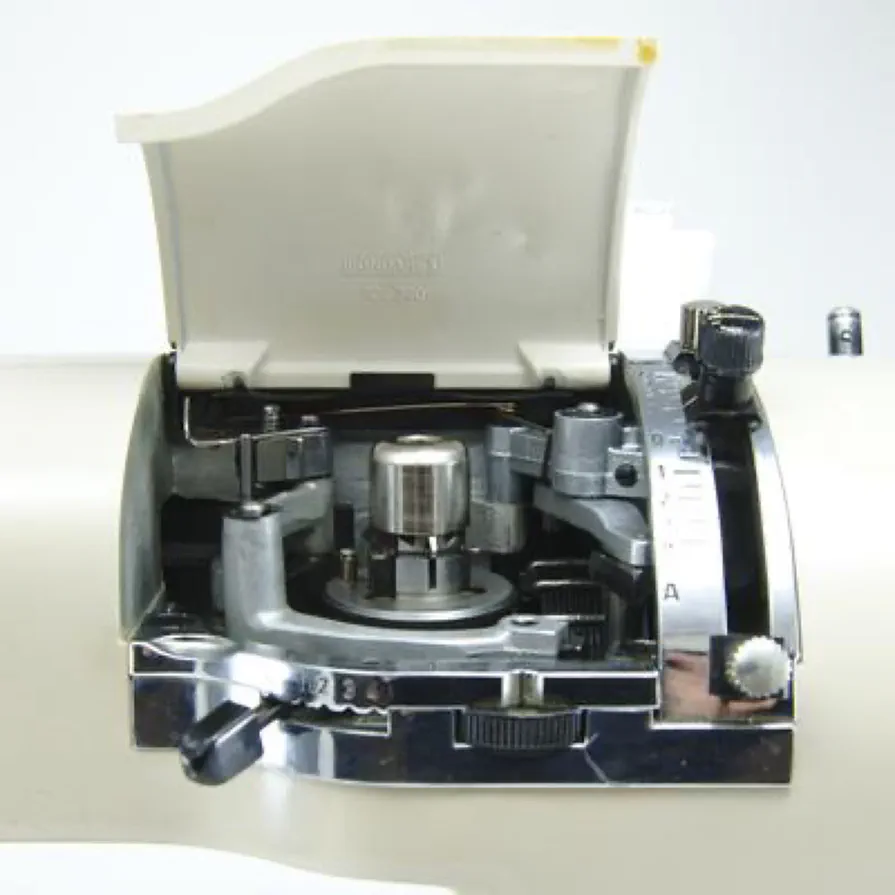
The lever that sets the stitch width causes the information on the disc to produce larger variations of the needle when it is read. A setting of 0 accordingly makes the needle sew straight ahead regardless of the structure of the disc.
The stitch length lever only affects the feed of the fabric and not the disc directly.
Making discs yourself
With a 3D printer with a 0.3 mm nozzle you can make quite acceptable Elna program discs yourself. The problem is that the Elna machine’s reading mechanism immortalises even the slightest variation in material as a deviation in the seam, which is why a 0.5 mm nozzle is not good enough.
PLA is a good choice of material: it is soft enough not to shatter at the speeds the machine spins it. The disc does deform and wear out fairly quickly in use, though.
That would make ABS the obvious candidate, but given the considerable risk of a disc splintering while running we have not carried out any experiments in that direction.
In our Elna disc repository we have put together a number of 3D models that can be printed on the 3D printer; it holds both basic discs with no further information and discs with zigzag patterns and the like.